Thursday, 10 February 2022

A Sketch of Alexander Berkman by Emma Goldman


A Sketch of Alexander Berkman

To write a biographic sketch of even an ordinary man within the limited space at my disposal would be difficult. But to write about one whose personality is so complex and whose life so replete with events as that of Alexander Berkman, is almost an insurmountable task. To do justice to such a rich and colorful subject one must not be so limited by space as I am. Above all, one should be removed, in point of time and distance, from the life to be portrayed. Which is not the case in the present instance.

I shall therefore not attempt a biography at the present time. I shall merely joint down a few outstanding features in the life and activities of our Comrade, which may serve as an introduction to something bigger yet to be written. Perhaps it may lead the reader to acquaint himself with Alexander Berkman's own story, the "Prison Memoirs of an Anarchist"[1], which portrays the various phases of his life and his ideal much more forcefully and intimately than any biographer could do.

That this truly great work has not yet been translated and published into other languages is a reflection on the European anarchists[2]): they adhere too religiously to the old standard works, the works treating of Anarchist theories. They should realise that the reactions of a human life to those theories, the struggle travail of the human spirit, are more vital and significant than the theories themselves. "Prison Memoirs of an Anarchist" speaks more powerfully than the theory and the ideal for which Alexander Berkman has lived, fought and suffered all his life.

Pre-revolutionary Russia is so rich in remarkable revolutionary characters that one would be at a loss to single out the most heroic figure in the revolutionary movement of that country. Russia has been a most fertile soil for the growth of revolutionary thought and feeling. The best flower which grew out of that soil -- Russian revolutionary youth -- stands unique in the annals of revolutionary history.

Alexander Berkman sprang from that soil. He was born in Vilno, in November, 1870, at a period rich in revolutionary ideas and activity. For it was in the epoch between the late sixties and the early eighties that Russia was shaken to her foundations by the heroism and sacrifice of her revolutionary martyrs. Alexander Berkman, sensitive and idealistic, could not escape the influence of that time, the period when everything in Russian was being torn from its old moorings, and the seeds for a new conception of human society -- political, religious, moral, economic and social -- were being planted. Thus, for instance, we find Alexander Berkman at the age of twelve writing a tract denying the existence of god; at fifteen he is a member a group engaged in the treasonable occupation of studying revolutionary literature. An additional factor in molding young Alexander's mind and character may have been the tragic life of his beloved uncle Maxim, exiled to Siberia for revolutionary activity. But even without the inspiration of that heroic figure in his otherwise bourgeois family, the intense youth would have, no doubt, consecrated himself to the cause of humanity. The creative revolutionary, like the true artist, is conditioned more by the impelling forces within him than by outer influences. Alexander Berkman's whole life is proof of it.

Because of his rebellious spirit he was expelled from the Gymnasium, and given a "wolf's passport", which closed every profession to him. He migrated to America which was, at that time, most barren ground for revolutionary ideas. It was early in 1888, only a few months after the judicial murder of the Chicago Anarchists, that Alexander Berkman arrived in the United States. While yet in Russia he had learned that the crime of Eleventh of November, 1887. He relates in his book how he came across the name of John Most and the Chicago martyrs in the little Kovno library. Still, young Alexander came to America with faith in her democratic liberties. It was not long, however, before he discovered the sham of American political freedom and economic opportunity. Had not the will to the Ideal been strong in Berkman, the American melting pot would have absorbed him as it has absorbed the great majority of the European influx. The intense struggle for existence and the thousand pitfalls for the man bent on material success would have monopolised his whole energy and time. Many Russian revolutionaries who came to America to seek refugee have been swallowed completely by the wild scramble for wealth and its "blessings".

Not so Alexander Berkman. He is a creative spirit whose dominant trait is to infuse new life, to give new forms, no matter how hard the struggle, how great the price to be paid. It is that trait, chiefly, which has made Alexander Berkman the outstanding figure in the revolutionary and Anarchist movement of the United States. It was not very long before he began to break the barren ground in that country. First in the Yiddish-speaking circles, in the group called Pioneers of Liberty: Berkman became one of its most active and devoted spirits. Later in the German anarchist movement, led at the time by John Most. But all that, it would seem, was merely preparatory to the supreme task toward which he was being borne by the irresistible force of his revolutionary reactions to the crying evils in our social make-up.

It was in the year 1892, at the time of the Homestead Steel strike -- the first and greatest life-and-death struggle of the steelworkers in the state of Pennsylvania against their feudal lord, Andrew Carnegie. It aroused the whole country to the slavery and exploitation in the steel industry. That great struggle, powerfully described by Alexander Berkman in his "Prison Memoirs", was accompanied by the importation to Homestead of Pinkerton thugs (the favorite detective and police defenders of the American plutocracy of thirty years ago) who killed eleven strikers, among them a child of ten. The person responsible for that crime was H. C. Frick, the representative and business partner of Carnegie. The brutal attitude of Frick toward the strikers, his public declaration that he would rather see every striker killed than concede a single demand, and the final murder on July 6, 1892, of eleven unarmed workingmen, roused America to indignation. Even the conservative press denounced Frick in the sharpest terms. Throughout America the workers gave vent to their feelings in protest meetings. But there was only one man who translated the wrath of the toilers into a heroic act. The man was Alexander Berkman. On the 22nd of July, 1892, he entered the office of H. C. Frick and attempted his life. Three bullets lodged in Frick's body, but he survived. Berkman received a prison sentence of 22 years, although his act -- according to the laws of Pennsylvania -- called only for 7 years. To give our Comrade such a cruel sentence, six charges were framed up against him: because he dared to strike at the very heart of the American industrial plutocracy.

It was the first Anarchist act of economic terror in the United States, and Alexander Berkman had to pay dearly for his revolutionary protest. He sent fourteen years of his life in the worst of prison hells, the Allegheny Penitentiary in Pennsylvania. What those years meant he has portrayed with a master hand in his "Prison Memoirs". Here it will suffice to say that while Berkman went through every imaginable torture of body and mind our Christian civilisation has devised to maim and break the social protestant, yet he emerged from his living tomb more than ever before convinced of the truth and beauty of his Ideal -- Anarchism. But one can not be shut away from life for fourteen long years and then take root easily again. Alexander Berkman, upon his liberation, threw himself into the revolutionary activities of America with the same ardor and passion as of yore. But his long prison life and the thought of the unfortunate victims he had left behind made the process of adjustment to the new surroundings a daily Golgotha.

Six years Alexander Berkman continued the supreme struggle to get back to life again. During that time he was not idle. He edited the "Mother Earth" magazine, the publication which I began in March, 1906. He lectured, he participated in strikes; he was one of the organisers of the Ferrer School, in New York, and one of its first teachers. He became the inspiration of every important Anarchist activity in America. But it not until Alexander Berkman had written his "Prison Memoirs", and his work before him in living form, that the black shadow of the dreadful prison year finally lifted. The book had finally freed him: he could once more feel the warmth of new life.

From then on until the present day Alexander Berkman has been intensely at work, organising, inspiring, creating. In 1914 he is the dominant figure in the unemployment movement, in New York. He helps to organise the wave of indignation which swept the country at the time of the Ludlow (Colorado) miners strike: when men, women and children had been shot and burned alive by the hired thugs of Rockefeller. Together with the New York comrades he carried the fight into the very citadel of the feudal lord, the Tarrytown home of the American king of plutocrats. Later on, owing to Alexander Berkman's great ability as organiser and his popularity with the rank and file of the workers, he could defy the police prohibition and arrange the memorable public funeral of the three comrades killed in the explosion of July 4th, 1914, in New York. The police came on the scene -- Union Square, that historic meeting police -- ready to do slaughter. But the presence of twenty thousand inspired and determined workers overawed them. They dared not carry out their murderous plan.

All through the summer of 1914 Alexander Berkman is the moving spirit of the anti-militarist movement. By means of "Mother Earth" magazine, numerous meetings, and hundred thousands of leaflets, the crime of militarism is brought to the attention of the American masses and our efforts find an echo in the hearts and minds of many workers.

In 1915 Alexander Berkman devotes himself to the campaign in behalf of Caplan and Schmidt, on trial for participation in the famous activities of the MacNamara brothers. He covers the greater part of America agitating in their cause, organises defense committees, raises funds, and is everywhere the center and the spirit of the work. Upon reaching San Francisco Alexander Berkman decides to publish there a revolutionary labor paper, the "Blast", which he continues for eighteen months and by means of it carries the ideas of Anarchism and revolutionary syndicalism to the workers in the labor organisations. Then, in July, 1916, there comes the Preparedness Parade explosion in San Francisco, followed by the arrest of five militant labor men -- Thomas Mooney, Billings, Mrs. Mooney, Weinberg, and Nolan. The usual panic, after such an event, takes hold of the whole labor movement on the Pacific coast. The labor leaders, cowardly at best, dare not come to the rescue of their arrested brothers. The Socialists, too, refuse aid. Mooney, Billings, et al. are left without defense, forsaken by their co-workers and so-called friends. As usual, the anarchists step into the breach. Alexander Berkman concentrates all his energies on a country-wide campaign in behalf of the victims of the capitalist conspiracy against labor. He tours the country, and visits every important labor organisation between San Francisco and New York. He knocks at every door, and spends days and nights with the more militant labor leaders to convince them of the innocence of Mooney and his comrades. In short, Alexander Berkman becomes the Zola of the American Dreyfus case. His j'accuse! is heard and taken up in every land. It saves the lives of Mooney and Billings. The intensive agitation made the whole country realise the dastardly crime of the State of California, engineered by the Chamber of Commerce. Had Alexander Berkman been able to continue that campaign, Mooney and Billings might have been at liberty ere this. But America's entry into the great war made it imperative for him and all other Anarchists of America to concentrate their efforts on the anti-war campaign. The Mooney case remained in the hands of labor politicians, with the result that Mooney and Billings are still in prison.

Then came the anti-conscription activities. Begun by our little group in New York, it spread quickly throughout the country. The American people did not want war and did not vote for it. Many rebelled against military conscription. Our work therefore met with great enthusiasm. The military and patriotic cliques realised the danger of that campaign. They used drastic measures. Alexander Berkman, myself, and others were arrested, tried and condemned to two years in the penitentiary, ten thousand dollars fine, each, and deportation at the end. In the case of Alexander Berkman plutocracy demanded more. It wanted to hang him. The California Chamber of Commerce had not forgiven him for his activities in the Mooney case. His efforts and energy had robbed them of their intended prey. But for Alexander Berkman they could have gotten rid of the five hated labor men. He had spoiled that blood feast. They meant to make him pay for it.

Alexander Berkman was then in New York. To get him to San Francisco was a problem. Once there, his life would be forfeited. The arrest and conviction of our Comrade for anti-war work happened just then. It was exactly what the San Francisco Chamber of Commerce needed. It was the right psychologic moment. An indictment of Berkman for alleged complicity in the San Francisco bomb explosion was easily obtained, and officers were dispatched to the State of New York to secure the extradition of Alexander Berkman. But the California henchmen had reckoned without the militant labor movement of New York. A million organised workers rose to his defense. They knew and loved our Comrade as an unflinching and courageous spirit who had been continuously fighting in their behalf. The labor bodies sent strong delegations to the Governor of the State of New York to protest the extradition of Alexander Berkman. At the same time the danger which Berkman faced became known in Russia. The revolutionary workers of Petrograd and the Kronstadt sailors organised demonstrations threatening the life of the American ambassador to Russia, Mr. Francis. The Federal Government at Washington was apprised of the situation. It feared that Alexander Berkman's extradition to California. would result in reprisals against its ambassador. The California demand for the extradition of Alexander Berkman was refused. Instead our comrade was taken to the Federal penitentiary at Atlanta, state of Georgia, to serve two years for his activities against the war.

After reading Alexander Berkman's story of the fearful conditions at the Allegheny penitentiary, one comes to the conclusion that man's inhumanity to man can go no further. But there seems to be no limit to the brutalities of the human beast. The Atlanta prison proved even more terrible than the one in Pennsylvania. After two years in that prison Alexander Berkman came out physically broken. He was compelled to undergo an operation, and when he was ordered to be deported few of his friends believed he could survive the hardships of the enforced journey. But the will to life which helped our Comrade to outlive the black past seems indestructible. And more than the will to life is his strong humanity, which has ever made him forget his personal suffering and caused him to devote himself to others. In the Western penitentiary of Pennsylvania it was the care of his fellows in misery: Alexander Berkman was their friend, adviser, correspondent, collector of funds to secure their release and to help them start anew in life. It was the same in the Atlanta prison. And it was again the care of his comrades -- two hundred and forty-five deportees on the floating prison, the "Buford" -- which made Berkman forget his own ills and even helped him to regain his former strength. Then, too, it was the passionate faith in the inspiring possibilities of Revolutionary Russia which infused new life in Alexander Berkman -- indeed, in all of us.

Of his Russian experiences Comrade Berkman will no doubt write himself. The pages which follow present a general view of the Russian Revolution, in its most vital phases, pointing out the main causes of its defeat. May the reader learn the great lesson it holds for the revolutionary movement of the world.

This sketch of the life of Alexander Berkman does not pretend to be anything more than an outline. If it will help to bring him nearer to his comrades in foreign lands and to the workers in Europe, I shall feel this attempt worth while. Above all, I hope that it may inspire our comrades to publish the "Prison Memoirs of an Anarchist" in the language of their country. For no biography -- much less a sketch -- can convey the personality of the man so clearly and vividly as the book of Alexander Berkman himself.

[1] Prison Memoirs of an Anarchist was published in 1912 by Mother Earth Publishing Association (New York). The Yiddish edition, Gefengnis-erinerungen fun an anarkhist, was published in two volumes in 1920 and 1921 by M. E. Fitzgerald (New York). -- JK/AAP

[2] The exception, I am glad to state, is our Austrian comrade Rudolf Grossmann, who had begun to publish Alexander Berkman's "Prison Memoirs" in German, before the war. The latter interfered with the work, but the German translation is now being published in the Vienna Anarchist weekly, "Erkenntnis und Befreiung". -- A Yiddish edition has also been published in America.

Tuesday, 8 February 2022

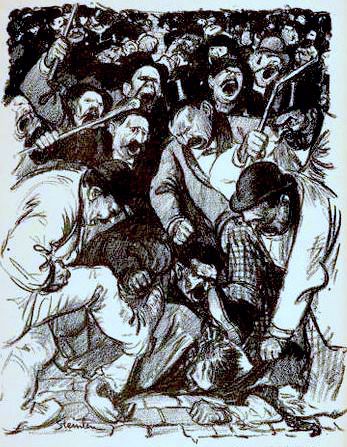
1898: The Honest Worker - Zo d’Axa


The Honest Worker (1898)

It’s the amazing fattening of the mass of the exploited that creates the increasing and logical ambition of the exploiters.

The kings of the mines, of the coalfields, and of gold would be wrong to worry. Their serfs’ resignation consecrates their authority. They no longer needs to claim that their power is be based on divine right, that decorative joke: their sovereignty is legitimated by popular consent. A workers’ plebiscite, consisting of patriotic adherence, declamatory platitudes or silent acquiescence assures the boss’s hold and the bourgeoisie’s reign

In this work we can recognize the artisan.

Be it in the mine or the factory, the Honest Worker, that sheep, has given the herd the mange.

The ideal of the supervisor has perverted the instincts of the people. A sports coat on Sunday, talking politics, voting...these are the hopes that take the place of everything. Odious daily labor awakens neither hatred nor rancor. The great party of the workers hates the lazybones who badly earns the money granted him by the boss.

Their heart belongs to their job.

They’re proud of their calloused hands.

However deformed the fingers, the yoke has done worse to the brain: the bumps of resignation, of cowardice, of respect have grown under the leather with the rubbing of the harness. Vain old workers wave their certificates: forty years in the same place! We hear them telling about this as they beg for bread in the courtyards.

“Have pity, ladies and gentlemen, on a sick old man, a brave worker, a good Frenchman, a former non-commissioned officer who fought in the war...Have pity, ladies and gentlemen.

It is cold: the windows remain closed. The old man doesn’t understand.

Teach the people! What else is needed? His poverty has taught him nothing. As long as there are rich and poor the latter will hitch themselves up so as to fill the service demanded. The worker’s neck is used to the harness. When still young and strong they are the only domestic beasts to not run wild in their shafts.

The proletarian’s special honor consists in accepting all those lies in whose name he is condemned to forced labor: duty, fatherland, etc. He accepts, hoping that by doing this he will raise himself into the bourgeois class. The victim makes himself an accomplice. The unfortunate talks of the flag, beats his chest, takes off his cap and spits in the air:

“I’m an honest worker.”

And it falls right back onto his face.

Friday, 4 February 2022

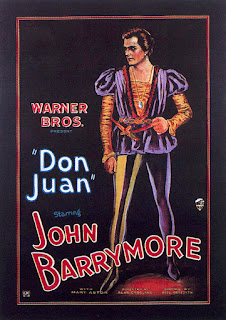
1926: Don Juan


 Youtube link


 Don Juan is a 1926 American romantic adventure film directed by Alan Crosland. It is the first feature-length film to utilize the Vitaphone sound-on-disc sound system with a synchronized musical score and sound effects, though it has no spoken dialogue. The film is inspired by Lord Byron's 1821 epic poem of the same name. The screenplay was written by Bess Meredyth with intertitles by Maude Fulton and Walter Anthony. Don Juan stars John Barrymore as the hand-kissing womanizer. The film has the most kisses in film history, with Barrymore kissing (all together) Mary Astor and Estelle Taylor 127 times.

 Don Juan is a 1926 American romantic adventure film directed by Alan Crosland. It is the first feature-length film to utilize the Vitaphone sound-on-disc sound system with a synchronized musical score and sound effects, though it has no spoken dialogue. The film is inspired by Lord Byron’s 1821 epic poem of the same name and the screenplay was written by Bess Meredyth with intertitles by Maude Fulton and Walter Anthony. Starring John Barrymore as the hand-kissing womanizer, the film has the most kisses in film history, with Barrymore kissing (all together) Mary Astor and Estelle Taylor 127 times. A print of Don Juan, including its Vitaphone soundtrack, still survives and is preserved at the UCLA Film and Television Archive.

Wednesday, 2 February 2022

The Actor and the King by Ret Marut/ B Traven


A dramatic reading


==========
The Actor and the King
(Ret Marut)

It seldom happens.

Fortunately.

Yet once it did occur that an actor chose a king to be his friend. Or perhaps it was the other way round. But in the end it makes no difference.

The two of them were honest and sincere friends. They quarrelled and were reconciled, as is generally the custom between true friends.

For two years their friendship held.

The actor made no more ado about this friendship than he would have done about a friendship with any other mortal.

One afternoon they went strolling together in the park.

The actor had played a king the evening before. But not a Shakespearean king. The royal patron of the theatre could not endure those. For Shakespeare's kings, notwithstanding their divine right, were quite ordinary men who loved and hated, murdered and reigned - just as it suited their intents and purposes.

The part of the king in the play of the previous evening, however, had been written by an author who was an anarchist at the age of eighteen, though later he was appointed a privy councillor.

It is understandable that this part should have delighted the king enormously and gave him occasion to converse with the actor on the problem of representing kings on the stage.

'What is the sensation you encounter, dear friend, when you appear in the role of a king?'

'I feel myself to be totally a king, with the result that I would be incapable of any gesture which does not suit the character of a king.'

'That I can understand very well. The crowd of extras, bowing before you as the stage directions instruct them to do, sustains your sense of majestic dignity and suggests to the audience that you are indeed a king.'

'Even without the supporting actors I remain a king in the eyes of my audience - even if it should happen that I must be quite alone on stage and deliver a monologue!'

This magnificently artistic conception of the actor's stimulated the king to draw a strictly circumscribed comparison between himself and the thespian king.

'But nonetheless, there remains an unbridgeable abyss between a real king and a theatrical king. However remarkable your performance as a king, you cease to be a king as soon as the curtain descends. Suggestibility and dramatic illusion put an end to your majesty as soon as they cease to operate. Whereas I, my dear fellow, I remain a king even when I lie in my bed!'

To this the actor rejoined, 'My dear friend, your comparison applies to both of us. No more than a short while ago we drove in a carriage to the gates of this park. Countless people lined the streets or ran behind us. They waved - you returned their greeting. They shouted as loud as they had breath, "Long live the King!" and "Hurrah!" - you smiled. Rather smugly. But if these people should ever cease to play their parts as unpaid extras, then you also - and not only in your bed, but also in the clear light of day - you also, my friend, will cease to be a real king!'

The king halted abruptly in his tracks.

He stared fixedly at the actor.

His lips grew pale and began to quiver.

Suddenly he turned on his heel.

Briskly he walked to the carriage and rode home.

Alone.

The friendship was at an end.

The friends never saw one another again.

And never again did the king attend the theater. He became a thinker.

Became obsessed by the notion that he was a quite ordinary mortal.

Consequently had to abdicate.

Died five years later.

His mind deranged.

It was said.


La Aktoro kaj la Reĝo

Mallonga rakonto pri du amikoj kaj la stranga rialto inter ilin.

Okazas malofte.

Bonŝance.

Sed unufoje tamen okazis, ke aktoro elektis reĝon kiel amikon.

Eble estis ankaŭ male.

Sed tio estas fine egala.

Ambaŭ estis sinceraj kaj bonaj amikoj. Ili kverelis kaj repaciĝis, tiel, kiel tio kutime okazas inter veraj amikoj.

Du jarojn daŭris la amikeco.

La aktoro pri tiu amikeco ne multe bruis, kvazaŭ temus pri la amikeco al kutima homo.

Iam, posttagmeze, ambaŭ promenis en la parko.

Je la vespero antaŭe la artisto rolis kiel reĝo. Ŝekspiran reĝon li ne ludis. Tiujn la reĝa amiko de la teatro ne ŝatis, ĉar la reĝoj de Ŝekspiro estis spite al siaj diaj benatecoj tute ĝustaj homoj, kiuj amas kaj malamas, murdas kaj regas — tute laŭ tio, kiel ĝuste plaĉis aŭ ne plaĉis al ili.

Sed la rolo de la prezentita reĝo el la pasinta vespero estis verkita de poeto, kiu kun dekok jaroj estis anarkiisto, sed pli poste li fariĝis kortega konsilanto. Memkompreneblas, ke tiu rolo tre plaĉis al la reĝo kaj, ke ĝi kaŭzis, ke li interparolis kun la aktoro pri la reĝa problemo de la teatro.

„Kion vi sentas, kara amiko, se vi prezentas reĝon ?“

„Mi sentas min tute kiel reĝo, tiel, ke mi ne povus fari geston, kiu ne laŭas al la karaktero de reĝo.“

„Tion mi komprenas tre bone.“

„La amaso de statistoj, kiuj, sekvante la reĝisoradon, devas kliniĝi antaŭ vi, vivtenas en vi la senton de reĝa indo kaj sugestas al la publiko, ke vi estas aŭtentika reĝo.“

„Por la publiko mi estas ankaŭ sen statistoj reĝo — eĉ tiam, kiam mi staras tute sola sur la scenejo kaj parolas monologon !.“

Tiu tute artista kompreno de la aktoro provokis la reĝon fari akre limigitan komparon inter si kaj la sceneja reĝo.

„Netranspontigebla abismo inter la vera kaj la teatra reĝoj tamen ekzistas. Vi estus povinta kiel ajn bone roli la reĝon, kun la momento, kiam la kurteno sinkas, vi ĉesas esti reĝo. La sento de sugestiteco kaj la statistoj finas vian sanktecon, tuj kiam ili malsukcesas. Sed mi, karulo mia, mi estas plu reĝo, eĉ se mi kuŝas en la lito !“

Al tio diris la aktoro : „Kara amiko mia, la komparo pravas por ni ambaŭ. Ni veturis antaŭe en la kaleŝo ĝis la pordego de la parko. Sur la stratoj staris kaj kuris nennombreble multaj homoj. Ili salutis — vi dankis. Ili kriis kun tuta forto : Vivu ! Ekscelenco ! — vi ridetis, iom vanta. Sed, se tiuj homoj iam ĉesos formi libervole statistojn, tiam vi, amiko mia, ĉesos ne nur en la lito, sed eĉ je la hela tago — esti reĝo !“

La reĝo haltis subite.

Li rigardis la aktoron firme.

Liaj lipoj fariĝis palaj kaj ektremis.

Subite li turniĝis.

Kun rapidaj paŝoj li iris al la kaleŝo kaj reveturis.

Sola.

La amikeco estis finita.

La amikoj neniam revidis sin reciproke.

Kaj neniam denove la reĝo iris en teatron.

Li fariĝis pensulo.

Li ekhavis la fiksan ideon esti tute normala homo.

Sekve de tio li devis eksiĝi.

Kvin jarojn poste li mortis.

Freneziĝinte.

Oni diris.

Tradukis Donjo, Frank & Cezar en klubvesperoj


Monday, 31 January 2022

Women as Sex Vendors; Or why Women are Conservative (Review)


 A marxists' confused attempt to argue that women are a petits-bourgeois class in society, both reactionary and privileged when compared to men.


The propertyless woman today is rarely reduced to starvation. If the price (or wages) offered for the sale of her laboring power are unsatisfactory, she may always supplement them through the barter or sale of her sex. That there are no women hoboes in the civilized world today is incontestable proof of the superiority of the economic status of woman over man.

The arguments are diverse and often contradictory, and there is absolutely no acknowledgement nor attempt to grapple with the contemporary women's movement, whose very existence rebuked most of his points. At the beginning of the book, the author mentions that there are few women revolutionists, so I suspect he was using this as an excuse not to engage with it. The Women's movement in particular the campaigns for suffrage and full civil rights were overwhelmingly reformist, but they involved a very diverse coalition of women from all backgrounds and political lineages, including revolutionaries like Sylvia Pankhurst. But even though for many political and social reforms were the end point of the movement it was an international movement that mobilised thousands of women to intervene socially and politically with an incredible diversity of tactics, from respectable petitioning to acts of terrorism, one Suffragette -Mary Leigh- threw an axe at the Prime Minister Asquith. 


And in response to this demand for reforms the suffrage movement was met with systematic violence, that included police beatings, arrests and torture by force-feeding hunger strikers.  

And he weakens any revolutionary purity grounds by comparing men to women and concluding that men are serious minded and talk and discuss things of importance like civil engineering. So I suspect this refusal to even acknowledge the existence of a mass and diverse movement of committed political reformers willing to make extreme sacrifices is less to do with purity and more to do with cowardice.

Also, largely ignored was the related movement by women to enter the workplace, thus giving up their beneficial sex commodity privileges in favour of the far inferior selling of labour that men must suffer through. I say largely because the author does grudgingly acknowledge women work but it's sparse and highly revealing. Apart from references to stereotypical jobs for women like stenographers there's a speculative passage on the First World War leading to massive social upheaval if it continues and forces more women into industry, and a criticism of women bringing down wages, which lays the blame not on the bosses or the weakness of the labour movement but on women themselves.


Women compete for jobs with men today, force down wages to a lower level and demand more from men before they will marry. And yet we see $25.00 a week stenographers giving up their positions to barter themselves, presumably for life, to $35.00 a week clerks or salesmen, rarely because of the mating instinct, but usually because of the personal triumph this means in the competition between members of the sex, and the social approbation which marriage brings.

Why compete for jobs and then ditch them as soon as they can attract a man with even a slightly higher salary? Selling labour power in this book is a negative, inferior way of survival in class society according to this book. This is not explained, the fact that women were increasingly pushing for access to work should be recognized as a major issue for the overall "biological and economic" argument, but instead it's just brushed aside because many of these women were still marrying. And where on earth is the evidence for why these relationships happen to come from? Either the author is thinking of one specific woman who earned $25.00 a week as a stenographer who married a clerk on $35.00 a week and told them it was for the "personal triumph this means in the competition between members of the sex, and the social approbation which marriage brings" or they're making assumptions.

Furthermore, several points can only stand up if you ignore or weren't aware of men in the sex industry. A key argument is that women are better off in the 1910s America because they can sell their sex in both marriage and prostitution, whereas men apparently could not. This is simply incorrect, men do in fact sell their sex commodities, both in sexual work and in courtship and marriage. Ultimately the approach being used in this book is the shotgun technic, the author lacks a killer argument to be the foundation, so it moves from one point to another but the relationship between them is rarely made clear and is only assumed, and  in numerous cases contradict one another.

One passage assures the reader that women are as capable as men at everything, and it's the economic system we live in that is to blame. But then a few pages later it advises only hiring male stenographers because they're smarter than women in that role. Another passage claims that listening to boys is always intellectually stimulating because they talk about serious topics like civil engineering, careers and politics, whereas girls only talk about boys and dresses. Another section relies heavily on Engels' Origins of the family to make its points for it. Most of the quotes concern the decline of maternal societies with the advent of industrial capitalism, one quote even refers to this as the "historic defeat of the female sex". But after that, the book makes the argument that women as a sex are superior to men because there are laws to protect women and in capitalist society laws are only made to protect the propertied, ergo women have more economic power. So Engels is correct that maternal society has been abolished and the key feature of this society was that women occupied privileged positions of power over men, turn the page and this non-maternal society we live in has as its key feature women occupying privileged positions of power over men. Unless Engels and the other historians named in that section were being brought up simply as an appeal to authority, this actually raises many questions over the orthodox marxist approach to stages of development.

The legal framework argument would also make the outlawing of child labour prove that it is the adult population who serve at the beck and call of the youth. Indeed, quite a few of the arguments in this book could be taken and altered slightly for "Why Children are Conservative".  

The book maintains a detached tone, arguing that the conclusions of the author are the result of economic and biological analysis and the attempt to get at the root of the issue. There are a few moments where this slips, usually when the author attempts to generalize from anecdotes or make absolute statements about things that have very obvious counter examples. But when the issue of divorce comes up, this falls away completely. The entire section is just a highly emotive tirade about how the courts and public opinion always sides with the woman and never the man.

If she be discreet, she may entertain lovers galore; she may refuse to perform any of the theoretical duties of the home; she may refuse to bear children or to surrender to her husband, without censure, and often without the knowledge of the world. If she be addicted to drunkenness, people will divine that her husband must have treated her brutally; if she be seen with other men, folks suspect that he neglects her.

If her husband seeks satisfaction for his desires elsewhere, she may divorce him and secure alimony; if he deserts her the law will return him to her side, if it can find him. If he fails to bring home the wherewithall to provide for her, she may have him sent to jail. If she discovers that he is getting the affection and the sex life which she has denied him, outside of his home, and if she buys a revolver and murders him in cold blood, the jury will exonerate her.

If a wife deserts her husband and her children, the law does not make her a criminal; for wife abandonment, the husband is held criminally liable.

No matter what the offense of the woman, custom and public opinion demand that every "decent" man permit his wife to accuse him on "just grounds" and to secure the divorce and call on the law to force him to pay her alimony for the rest of their natural lives.

No matter what the provocation, legally or sentimentally, no man can be exonerated for killing a woman. No matter how little the provocation, legally or sentimentally, any woman may kill almost any man, and the jury will render a verdict of Not Guilty. She has only to say that he "deceived her."

I looked it up, and it's not true, until the 1970s the easiest way to get a divorce was to move to Nevada because its requirements were less stringent, and you only had to live in the state for six months to qualify. Failing that, another Western state would do. These `divorce mill` states as they were called wouldn't have been needed if the tirade above were true. Until no-fault divorce was made legal in the US, you had to prove one spouse was at fault, if both were found at fault the divorce request was denied. During the period that this book was written, the majority of divorces were given to the wife 


During the whole period under study the over-
whelming majority of divorces were granted to the
wife, and this majority increased slightly through-
out the period. There is a definite territorial
pattern: The proportion of decrees granted to
women in the South, particularly the South Atlantic
Division, was always lower than in other areas.
During the early years of divorce statistics the
overwhelming majority of decrees in several
southern States were granted to husbands, but
this majority disappeared about the turn of the
century. On the other extreme, wives have ob-
tained about three-fourths of all decrees in the
West and, since 1916, in the North Central Region

 https://www.cdc.gov/nchs/data/series/sr_21/sr21_024.pdf

However, this still shows the dishonesty of the author's framing, husbands could obtain divorces if they wished and could prove the fault. 

To be perfectly honest, I suspect this pamphlet was authored as an attempt to promote a conservative conception of the socialist movement. During the war, the suffrage movement was making progress and women were entering the workforce in large numbers. It was only a matter of time before the number of women agitators and revolutionists increased significantly. Of course since it can't even acknowledge the existence of these currents its ability to head this off was doomed from the beginning.


Tuesday, 25 January 2022

1952: The Fighter


Link


 The Fighter is a 1952 American film noir boxing film based on the 1911 short story "The Mexican" by Jack London. The film is directed by Herbert Kline and produced by Alex Gottlieb. Kline and Aben Kandel wrote the adapted screenplay. The film was released by United Artists in the United States on May 23, 1952.

Saturday, 22 January 2022

1918: The Sinking of the Lusitania


Link


 The Sinking of the Lusitania (1918) is a silent animated short film by American cartoonist Winsor McCay. It is a work of propaganda re-creating the never-photographed 1915 sinking of the British liner RMS Lusitania. At twelve minutes it has been called the longest work of animation at the time of its release. The film is the earliest surviving animated documentary and serious, dramatic work of animation. In 1915 a German submarine torpedoed and sank the RMS Lusitania; 128 Americans were among the 1,198 dead. The event outraged McCay, but the newspapers of his employer William Randolph Hearst downplayed the event, as Hearst was opposed to the US joining World War I. McCay was required to illustrate anti-war and anti-British editorial cartoons for Hearst's papers. In 1916, McCay rebelled against his employer's stance and began work on the patriotic Sinking of the Lusitania on his own time with his own money. The film followed McCay's earlier successes in animation: Little Nemo (1911), How a Mosquito Operates (1912), and Gertie the Dinosaur (1914). McCay drew these earlier films on rice paper, onto which backgrounds had to be laboriously traced; The Sinking of the Lusitania was the first film McCay made using the new, more efficient cel technology. McCay and his assistants spent twenty-two months making the film. His subsequent animation output suffered setbacks, as the film was not as commercially successful as his earlier efforts, and Hearst put increased pressure on McCay to devote his time to editorial drawings.

Wednesday, 19 January 2022

The Most Dangerous Game


Video Link


The Most Dangerous Game.
by Richard Connell

Originally
published in Richard Connell’s
short story collection
Variety
NEW YORK

MINTON, BALCH & COMPANY

1925
 

The Most Dangerous Game


OFF THERE to the rightsomewhereis a large island,
said Whitney.
It’s rather a mystery
What island is it? Rainsford asked.
The old charts call it Ship-Trap Island,’” Whitney replied.
A suggestive name, isn’t it? Sailors have a curious dread of the
place. I
don’t know why. Some superstition
Can’t see it, remarked Rainsford, trying to peer through the
dank
tropical night that was palpable as it pressed its thick warm
blackness
in upon the yacht.


You’ve good eyes, said Whitney, with a laugh, and I’ve
seen you pick
off a moose moving in the brown fall bush at four
hundred yards, but
even you can’t see four miles or so through a
moonless Caribbean night.

Nor four yards, admitted Rainsford. Ugh! It’s like moist
black velvet.

It will be light enough in Rio, promised Whitney. We
should make it
in a few days. I hope the jaguar guns have come
from Purdey
’s. We should have some good hunting up the
Amazon. Great sport, hunting.

The best sport in the world, agreed Rainsford.
For the hunter, amended Whitney. Not for the jaguar.
Don’t talk rot, Whitney, said Rainsford. You’re a big-game
hunter,
not a philosopher. Who cares how a jaguar feels?
Perhaps the jaguar does, observed Whitney.
Bah! They’ve no understanding.
Even so, I rather think they understand one thingfear. The
fear of
pain and the fear of death.
Nonsense, laughed Rainsford. This hot weather is making
you soft,
Whitney. Be a realist. The world is made up of two
classes
the hunters and the huntees. Luckily, you and I are
hunters. Do you t
hink we’ve passed that island yet?
I can’t tell in the dark. I hope so.
Why? asked Rainsford.
The place has a reputationa bad one.
Cannibals? suggested Rainsford.
Hardly. Even cannibals wouldn’t live in such a God-forsaken
place. But
it’s gotten into sailor lore, somehow. Didn’t you notice
that the crew
’s nerves seemed a bit jumpy today?
They were a bit strange, now you mention it. Even Captain
Nielsen


Yes, even that tough-minded old Swede, who’d go up to the
devil himself
and ask him for a light. Those fishy blue eyes held a
look I never saw
there before. All I could get out of him was Thisplace has an evil name among seafaring men, sir. Then he said to
me, very gravely,
Don’t you feel anything?as if the air about us
was actua
lly poisonous. Now, you mustn’t laugh when I tell you
this
I did feel something like a sudden chill.
There was no breeze. The sea was as flat as a plate-glass
window. We
were drawing near the island then. What I felt was
a
amental chill; a sort of sudden dread.
Pure imagination, said Rainsford. One superstitious sailor
can taint the whole ship
’s company with his fear.
Maybe. But sometimes I think sailors have an extra sense
that tells
them when they are in danger. Sometimes I think evil is
a
tangible thingwith wave lengths, just as sound and light have.
An evil place
can, so to speak, broadcast vibrations of evil.
Anyhow, I
’m glad we’re getting out of this zone. Well, I think I’ll
turn in now, Rainsford.

I’m not sleepy, said Rainsford. I’m going to smoke another
pipe up on
the afterdeck.
Good night, then, Rainsford. See you at breakfast.
Right. Good night, Whitney.


There was no sound in the night as Rainsford sat there but the

muffled
throb of the engine that drove the yacht swiftly through
the darkness,
and the swish and ripple of the wash of the
propeller.


Rainsford, reclining in a steamer chair, indolently puffed on

his
favorite brier. The sensuous drowsiness of the night was on
him.
It’s so dark, he thought, that I could sleep without closing
my eyes; the
night would be my eyelids
An abrupt sound startled him. Off to the right he heard it, and

his
ears, expert in such matters, could not be mistaken. Again he
heard the
sound, and again. Somewhere, off in the blackness,
someone had fired a
gun three times.


Rainsford sprang up and moved quickly to the rail, mystified.

He
strained his eyes in the direction from which the reports had
come, but
it was like trying to see through a blanket. He leaped
upon the rail and
balanced himself there, to get greater elevation;
his pipe, striking a
rope, was knocked from his mouth. He lunged
for it; a short, hoarse cry
came from his lips as he realized he had
reached too far and had lost
his balance. The cry was pinched off
short as the b
lood-warm waters of the Caribbean Sea dosed over
his head.


He struggled up to the surface and tried to cry out, but the

wash from
the speeding yacht slapped him in the face and the salt
water in his
open mouth made him gag and strangle. Desperately
he str
uck out with strong strokes after the receding lights of the
yacht, but he stopped
before he had swum fifty feet. A certain
cool
-headedness had come to him; it was not the first time he hadbeen in a tight place. There was a chance that his cries could be
heard by someone aboard the yacht, but
that chance was slender
and grew more slender as the yacht raced on. He
wrestled himself
out of his clothes and shouted with all his power. The
lights of the
yacht became faint and ever
-vanishing fireflies; then they were
blotted out entirely by the night.


Rainsford remembered the shots. They had come from the

right, and
doggedly he swam in that direction, swimming with
slow, deliberate
strokes, conserving his strength. For a seemingly
endless time he fought
the sea. He began to count his strokes; he
could do possibly a hundred
more and then
Rainsford heard a sound. It came out of the darkness, a high

screaming
sound, the sound of an animal in an extremity of
anguish and terror.


He did not recognize the animal that
made the sound; he did
not try to;
with fresh vitality he swam toward the sound. He heard
it again; then it
was cut short by another noise, crisp, staccato.
Pistol shot, muttered Rainsford, swimming on.


Ten minutes of determined effort brought
another sound to
his ears
the most welcome he had ever heardthe muttering and
growling of the sea
breaking on a rocky shore. He was almost on
the rocks before he saw
them; on a night less calm he would have
been shattered against them.
With his remaining strength he
dragged himself from the swirling waters.
Jagged crags appeared to
jut up into the opaqueness; he forced himself
upward, hand over
hand. Gasping, his hands raw, he reached a flat place
at the top.
Dense jungle came down to the very edge of the
cliffs. What
perils that tangle of trees and underbrush might hold for him did

not
concern Rainsford just then. All he knew was that he was safe
from his
enemy, the sea, and that utter weariness was on him. He
flung himself
down at the jungle edge and tumbled headlong into
the deepest sleep of
his life.


When he opened his eyes he knew from the position of the

sun that it was
late in the afternoon. Sleep had given him new
vigor; a sharp hunger was
picking at him. He looked about him,
almost cheerfully.

Where there are pistol shots, there are men. Where there
are men, there
is food, he thought. But what kind of men, he
wondered, in so
forbidding a place? An unbroken front of snarled
and ragged jungle
fringed the shore.


He saw no sign of a trail through th
e closely knit web of weeds
and
trees; it was easier to go along the shore, and Rainsford
floundered
along by the water. Not far from where he landed, he
stopped.


Some wounded thing
by the evidence, a large animalhad
thrashed about
in the underbrush; the jungle weeds were crusheddown and the moss was lacerated; one patch of weeds was stained
crimson. A small, glittering
object not far away caught Rainsford’s
eye and he picked it up. It was
an empty cartridge.
A twenty-two, he remarked. That’s odd. It must have been
a fairly
large animal too. The hunter had his nerve with him to
tackle it with a
light gun. It’s clear that the brute put up a fight. I
suppose the first
three shots I heard was when the hunter flushed
his quarry and w
ounded it. The last shot was when he trailed it
here and finished it.


He examined the ground closely and found what he had

hoped to find
the print of hunting boots. They pointed along the
cliff in the direction he
had been going. Eagerly he hurried along,
now slipping on a rotten log
or a loose stone, but making
headway; night was beginning to settle down
on the island.
Bleak darkness was blacking out the sea and jungle when

Rainsford
sighted the lights. He came upon them as he turned a
crook in the coas
t line; and his first thought was that be had come
upon a village, for
there were many lights. But as he forged along
he saw to his great
astonishment that all the lights were in one
enormous building
a lofty structure with pointed towers plunging
upward i
nto the gloom. His eyes made out the shadowy outlines
of a palatial chateau; it was set on a
high bluff, and on three sides
of it cliffs dived down to where the sea
licked greedy lips in the
shadows.


Mirage, thought Rainsford. But it was no mirage, he found,
when he
opened the tall spiked iron gate. The stone steps were
real enough; the
massive door with a leering gargoyle for a
knocker was real enough; yet
above it all hung an air of unreality.
He lifted th
e knocker, and it creaked up stiffly, as if it had
never
before been used. He let it fall, and it startled him with its
booming
loudness. He thought he heard steps within; the door
remained closed.
Again Rainsford lifted the heavy knocker, and
let it fall.
The door opened thenopened as suddenly as if it were
on a spring
and Rainsford stood blinking in the river of glaring
gold light that poured out. The
first thing Rainsford’s eyes
discerned was the largest man Rainsford had
ever seena gigantic
creature,
solidly made and black bearded to the waist. In his hand
the man held a long
-barreled revolver, and he was pointing it
straight at Rainsford
’s heart.


Out of the snarl of beard two small eyes regarded Rainsford.

Don’t be alarmed, said Rainsford, with a smile which he
hoped was
disarming. I’m no robber. I fell off a yacht. My name
is Sanger
Rainsford of New York City.
The menacing look in the eyes did not change. The revolver

point
ed as rigidly as if the giant were a statue. He gave no sign that
he
understood Rainsford’s words, or that he had even heardthem. He was dressed in uniforma black uniform trimmed with gray astrakhan.


I’m Sanger Rainsford of New York, Rainsford began again.
I fell off a yacht. I am hungry.
The man
’s only answer was to raise with his thumb the
hammer of his
revolver. Then Rainsford saw the man’s free hand
go to his forehead in a
military salute, and he saw him click his
heels together and stand at
attention. Another man was coming
down the broad marbl
e steps, an erect, slender man in evening
clothes. He advanced to Rainsford and held out
his hand.
In a cultivated voice marked by a slight accent that gave it

added
precision and deliberateness, he said, It is a very great
pleasure and
honor to welcome Mr. Sanger Rainsford, the
celebrated hunter, to my home.


Automatically Rainsford shook the man
’s hand.
I’ve read your book about hunting snow leopards in Tibet,
you see,
explained the man. I am General Zaroff.
Rainsford
’s first impression was that the man was singularly
handsome;
his second was that there was an original, almost
bizarre quality about
the general’s face. He was a tall man past
middle age, for his hair was
a vivid white; but his thick eyebrows
and pointed military mustache were
as black as the night from
which Rainsford had come. His eyes, too, were
black and very
bright. He had high cheekbones, a sharp
-cut nose, a spare, dark
face
the face of a man used to giving orders, the face of an
aristocrat. Turning to the giant in uniform, the
general made a
sign.
The giant put away his pistol, saluted, withdrew.
Ivan is an incredibly strong fellow, remarked the general,
but he has the misfortune to be deaf and dumb. A simple fellow,
but, I
’m afraid, like all his race, a bit of a savage.
Is he Russian?
He is a Cossack, said the general, and his smile showed red
lips and
pointed teeth. So am I.
Come, he said, we shouldn’t be chatting here. We can talk
later. Now
you want clothes, food, rest. You shall have them. This
is a
most-restful spot.
Ivan had reappeared, and the general spoke to him with lips

that moved
but gave forth no sound.
Follow Ivan, if you please, Mr. Rainsford, said the general.
I was about to have my dinner when you came. I’ll wait for you.
You
’ll find that my clothes will fit you, I think.
It was to a huge, beam
-ceilinged bedroom with a canopied
bed big enough
for six men that Rainsford followed the silent
giant. Ivan laid out an
evening suit, and Rainsford, as he put it on,
noticed that it came from
a London tailor who ordinarily cut and
sewed for none below the rank of
duke.The dining room to which Ivan conducted him was in many ways remarkable. There was a medieval magnificence about it; it suggested a baronial hall of feudal times with its oaken panels, its high ceiling, its vast refectory tables where two-score men could sit down to eat. About the hall were mounted heads of many
animals
lions, tigers, elephants, moose, bears; larger or more
perfect specimens Rainsford had never seen.
At the great table the
general was sitting, alone.


You’ll have a cocktail, Mr. Rainsford, he suggested. The
cocktail was
surpassingly good; and, Rainsford noted, the table
appointments
were of the finestthe linen, the crystal, the silver,
the china.


They were eatin
g borscht, the rich, red soup with whipped
cream so dear
to Russian palates. Half apologetically General
Zaroff said,
We do our best to preserve the amenities of
civilization here. Please forgive any
lapses. We are well off the
beaten track, you know. Do
you think the champagne has
suffered from its long ocean trip?

Not in the least, declared Rainsford. He was finding the
general a
most thoughtful and affable host, a true cosmopolite.
But there was one
small trait of the general’s that made Rainsford
u
ncomfortable. Whenever he looked up from his plate he found
the general studying him,
appraising him narrowly.
Perhaps, said General Zaroff, you were surprised that I
recognized
your name. You see, I read all books on hunting
published in English,
French, and Russian. I have but one passion
in my life, Mr. Rainsford,
and it is the hunt.
You have some wonderful heads here, said Rainsford as he
ate a
particularly well-cooked filet mignon. That Cape buffalo is
the
largest I ever saw.
Oh, that fellow. Yes, he was a monster.
Did he charge you?
Hurled me against a tree, said the general. Fractured my
skull. But I
got the brute.
I’ve always thought, said Rainsford, that the Cape buffalo is
the
most dangerous of all big game.
For a mo
ment the general did not reply; he was smiling his
curious
red-lipped smile. Then he said slowly, No. You are
wrong, sir. The Cape
buffalo is not the most dangerous big game.
He sipped his wine.
Here in my preserve on this island, he said
in the same s
low tone, I hunt more dangerous game.
Rainsford expressed his surprise.
Is there big game on this
island?

The general nodded.
The biggest.
Really?
Oh, it isn’t here naturally, of course. I have to stock the
island.
What have you imported, general? Rainsford asked.
Tigers?
The general smiled.
No, he said. Hunting tigers ceased to
interest me
some years ago. I exhausted their possibilities, you
see. No thrill left
in tigers, no real danger. I live for danger, Mr.
Rainsford.

The gen
eral took from his pocket a gold cigarette case and
offered his
guest a long black cigarette with a silver tip; it was
perfumed and gave
off a smell like incense.
We will have some capital hunting, you and I, said the
general.
I shall be most glad to have your society.
But what game began Rainsford.
I’ll tell you, said the general. You will be amused, I know. I
think
I may say, in all modesty, that I have done a rare thing. I
have
invented a new sensation. May I pour you another glass of
port?

Thank you, general.
The general filled both glasses, and said,
God makes some
men poets.
Some He makes kings, some beggars. Me He made a
hunter. My hand was made
for the trigger, my father said. He was
a very rich man with a quarter
of a million acres in the Crimea,
and he was an ardent sportsman. When I
was only five years old
he gave me a little gun, specially made in
Moscow for me, to
shoot sparrows with. When I shot some of his prize
turkeys with
it, he did not punish me; he complimented me on my

marksmanship. I killed my first bear in the Caucasus when I was

ten. My
whole life has been one prolonged hunt. I went into the
army
it was expected of noblemen’s sonsand for a time
commanded a division of
Cossack cavalry, but my real interest
was always
the hunt. I have hunted every kind of game in every
land. It would be impossible for me to tell
you how many animals
I have killed.


The general puffed at his cigarette.

After the debacle in Russia I left the country, for it was
imprudent
for an officer of the Czar to stay there. Many noble
Russians lost
everything. I, luckily, had invested heavily in
American securities, so
I shall never have to open a tea room in
Monte Carlo or drive a taxi in
Paris. Naturally, I continued to
hunt
grizzlies in your Rockies, crocodiles in the Ganges,
rhinoceroses in East Africa. It was in Africa
that the Cape buffalo
hit me and laid me up for six months. As soon as I
recovered I
started for the Amazon to hunt jaguars, for I had heard they
were
unusually cunning. They wer
en’t. The Cossack sighed. They
were no
match at all for a hunter with his wits about him, and a
high
-powered rifle. I was bitterly disappointed. I was lying in my
tent with a
splitting headache one night when a terrible thoughtpushed its way into my mind. Hunting was beginning to bore me!
And hunting, remember, had
been my life. I have heard that in
America businessmen often go to
pieces when they give up the
business that has been their life.

Yes, that’s so, said Rainsford.
The general smiled.
I had no wish to go to pieces, he said.
I must do something. Now, mine is an analytical mind, Mr.
Rainsford. Doubtless
that is why I enjoy the problems of the
chase.

No doubt, General Zaroff.
So, continued the general, I asked myself why the hunt no
longer
fascinated me. You are much younger than I am, Mr.
Rainsford, and have
not hunted as much, but you perhaps can
guess the answer.

What was it?
Simply this: hunting had ceased to be what you call a
sporting
proposition. It had become too easy. I always got my
quarry. Always.
There is no greater bore than perfection.
The general lit a fresh cigarette.

No animal had a chance with me any more. That is no boast;
it is a
mathematical certainty. The animal had nothing but his legs
and his
instinct. Instinct is no match for reason. When I thought
of this it was
a tragic moment for me, I can tell you.
Rainsford leaned across the table, absorbed in what his host

was saying.

It came to me as an inspiration what I must do, the general
went on.

And that was?
The general smiled the quiet smile of one who has faced an

obstacle and
surmounted it with success. I had to invent a new
animal to hunt,
he said.
A new animal? You’re joking.
Not at all, said the general. I never joke about hunting. I
needed a new animal. I found one. So I bought this
island built
this house, and here I do my hunting. The island is perfect
for my
purposes
there are jungles with a maze of trails in them, hills,
swamps

But the animal, General Zaroff?
Oh, said the general, it supplies me with the most exciting
hunting
in the world. No other hunting compares with it for an
instant. Every
day I hunt, and I never grow bored now, for I have
a quarry with which I
can match my wits.
Rainsford
’s bewilderment showed in his face.
I wanted the ideal animal to hunt, explained the general.
So I said, What are the attributes of an ideal quarry? And the
answer was, of
course, It must have courage, cunning, and, above
all, it must be able
to reason.But no animal can reason, objected Rainsford.


My dear fellow, said the general, there is one that can.
But you can’t mean gasped Rainsford.
And why not?
I can’t believe you are serious, General Zaroff. This is a grisly
joke.

Why should I not be serious? I am speaking of hunting.
Hunting? Great God, General Zaroff, what you speak of is
murder.

The general laughed with entire good nature. He regarded

Rainsford
quizzically. I refuse to believe that so modern and
civilized a young
man as you seem to be harbors romantic ideas
about the value of human
life. Surely your experiences in the
war
He stopped.


Did not make me condone cold-blooded murder, finished
Rainsford stiffly.

Laughter shook the general.
How extraordinarily droll you
are!
he said. One does not expect nowadays to find a young
man of the educated
class, even in America, with such a naïve,
and, if I may say so,
mid-Victorian point of view. It’s like finding a
snuffbox in a
limousine. Ah, well, doubtless you had Puritan
ancestors. So many
Americans appear to have had. I’ll wager
you
’ll forget your notions when you go hunting with me. You’ve a
genuine new thrill in store for you,
Mr. Rainsford.
Thank you, I’m a hunter, not a murderer.
Dear me, said the general, quite unruffled, again that
unpleasant
word. But I think I can show you that your scruples
are quite ill founded.

Yes?
Life is for the strong, to be lived by the strong, and, if needs
be,
taken by the strong. The weak of the world were put here to
give
the strong pleasure. I am strong. Why should I not use my
gift? If I wish to
hunt, why should I not? I hunt the scum of the
earth: sailors from tramp
shipslascars, blacks, Chinese, whites,
mongrels
a thoroughbred horse or hound is worth more than a
score
of them.
But they are men, said Rainsford hotly.
Precisely, said the general. That is why I use them. It gives
me
pleasure. They can reason, after a fashion. So they are
dangerous.

But where do you get them?
The general
’s left eyelid fluttered down in a wink. This island
is
called Ship-Trap, he answered. Sometimes an angry god of
the high seas
sends them to me. Sometimes, when Providence is
not so kind, I help
Providence a bit. Come to the window with
me.

Rainsford went to the window and l
ooked out toward the sea.


Labels

1770s (2) 1800s (1) 1810s (2) 1820s (1) 1840s (2) 1850s (1) 1860s (1) 1880s (4) 1890s (7) 1900s (7) 1910s (11) 1920s (19) 1930s (15) 1940s (14) 1950s (5) 1960s (4) 1970s (6) 1980s (1) 2000s (2) 2010s (1) 2020s (5) Activism (1) Adverts (1) Animation (8) archive matters (1) Canada (1) cartoons (6) comics (5) Copyright Reform (2) Disney (6) Documentaries (3) Drama (2) Essays (46) Europe (1) Fantasy (4) Film (21) George Orwell (10) Germany (3) Greta Garbo (1) horror (4) images (20) Japan (1) letter (1) LGBTQ (1) Maps (1) music (2) news (2) Newspapers (2) Newsreels (3) Noir (1) Open Media (3) pamphlets (5) patents (3) photography (1) poetry (8) Reviews (4) Robert frost (1) Romance (2) Science Fiction (5) Silent (3) texts (42) thrillers (1) trademarks (2) translation (1) UK (6) Videogames (3) War movies (3) Westerns (1)